In short
Framed entirely by towering sandstone walls in the historical epicenter of the Gothic Quarter, this austere stone courtyard transports onlookers directly into the Mediterranean Middle Ages. Once the sovereign seat of the Counts of Barcelona and Kings of Aragon, the plaza encloses monumental throne halls, royal watchtowers, and subterranean access to intact ancient Roman streets.
- Historic ceremonial court of the Counts of Barcelona
- Grand royal palace complex dating back to medieval antiquity
- Soaring multi-tiered watchtower of King Martí the Humane
- Gothic Royal Chapel of Santa Àgata built onto Roman walls
- Subterranean entrance to the sprawling underground Roman city ruins
☰ Table of content
The perfect stop
Echoing stone acoustics make this enclosed royal enclave feel suspended outside contemporary time.
-
Recommended stop time 40'
Gives ample opportunity to absorb the imposing stone facades, climb the palace steps, and examine the medieval masonry details.
-
Local customs
Travelers sit on the wide semicircular steps to sketch the Gothic windows, music students test the natural echo with guitars, and history tours gather by the corner sculpture.
What to see in Plaça del Rei
Sovereign Catalan gothic architecture and ancient defensive masonry define the austere perimeter of this royal courtyard.
Palau Reial Major
The grand medieval royal residence dominated by the vast arched ceremonial hall Saló del Tinell.
Mirador del Rei Martí Incredible views
A five-story rectangular watchtower erected in 1555 offering commanding historical views over the port.
Capella de Santa Àgata
A 14th-century royal gothic chapel built directly atop the city's ancient Roman defensive stone wall.
Palau del Lloctinent
A 16th-century Renaissance palace built for the Spanish viceroy featuring a striking carved wooden staircase.
Sculpture Topos V
A massive abstract weathered-iron geometric sculpture installed in 1986 by Basque sculptor Eduardo Chillida.
Quick summary of Plaça del Rei
Glance through these operational takeaways to balance your historical exploration with the site’s unique medieval layout.
Best moment
Midday
Crowd
Moderate during walking tours
Kid friendly
Good, wide open stone space
Unmissable
Gazing upward at the soaring Mirador del Rei Martí
Type of experience
Medieval royalty, monumental gothic architecture, and Roman heritage
What to expect
Ancient stone flagstones, dramatic vertical walls, and solemn stillness
Explore the squares of Barcelona
Strolling through historic passages allows immediate open-air viewing before venturing underground into the museum halls.
Good to know
- High stone walls block direct sunlight during winter mornings.
- Heavy tourist walking groups frequently gather in central areas.
- Flagstones can become slick during occasional autumn rain showers.
- Museum access requires timed entrance tickets during peak weekends.
Practical tips
- Sit on the curved palace steps to take wide photos.
- Pair with the underground galleries of the MUHBA museum.
- Enter through the arched opening off Carrer dels Comtes.
- Return at dusk to admire historic facade uplighting.
How to reach Plaça del Rei
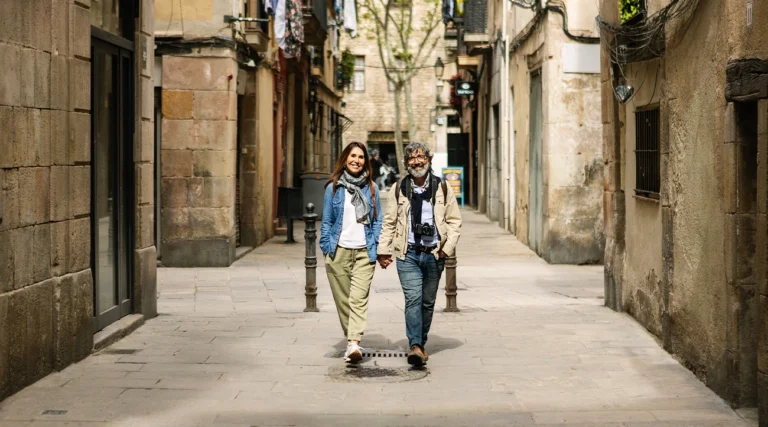
Tucked right behind the cathedral choir, reached through tight pedestrian passageways.
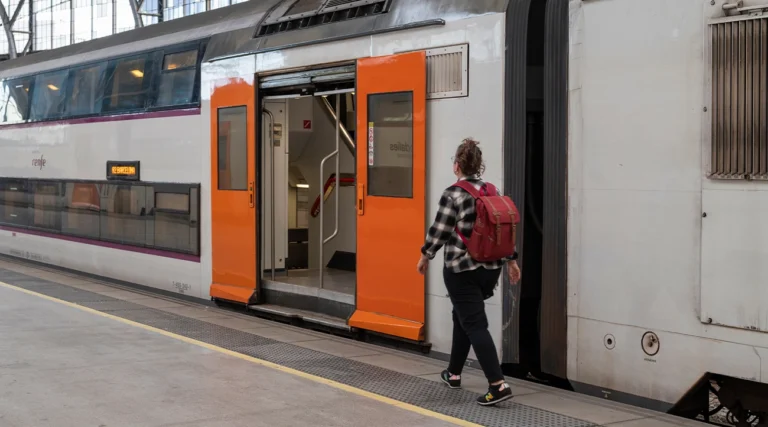
Line L4 (Yellow) to Jaume I station, then walk three minutes northwest up Carrer de la Llibreteria.
Lines 47, 120, V15, and V17 stop along Via Laietana right at the entrance to the Gothic Quarter.
A two-minute stroll southeast from the rear apse of the Cathedral of Santa Eulàlia.
Plaça del Rei, Ciutat Vella, 08002
Official Transport in Barcelona
History of Plaça del Rei
The foundations of Plaça del Rei trace back to the establishment of Roman Barcino in the 1st century BC, when this elevated terrain formed the northeastern quadrant of the colony, packed with garum fish factories, wine workshops, and stone defensive towers. Following the collapse of the Roman Empire and the Visigothic era, the site evolved into the fortified citadel of the Counts of Barcelona.
Read allShow less
Read allShow less
By the 11th century, the counts established their official residence here, creating the Palau Reial Major, which gradually transformed into the central power hub of the sprawling Crown of Aragon.
During the 14th century, King Peter the Ceremonious undertook a radical expansion of the palace complex, commissioning master builder Guillem Carbonell to construct the monumental Saló del Tinell. Completed between 1359 and 1370, this grand hall featured six colossal diaphragm stone arches spanning seventeen meters, serving as the setting for state banquets, parliamentary sessions, and royal tribunals.
In 1493, the Catholic Monarchs Ferdinand and Isabella reportedly received Christopher Columbus on the exterior steps of the palace following his first transatlantic voyage, cementing the plaza’s global historical prominence.
The 16th century added the Renaissance Palau del Lloctinent and the tall watchtower of King Martí. In 1931, during public works to open the modern avenue of Via Laietana, laborers discovered extensive Roman ruins lying directly beneath the medieval flagstones.
Municipal archaeologists excavated the subterranean space, leading to the creation of the Barcelona City History Museum (MUHBA) in 1943. Today, Plaça del Rei stands as a unique two-tiered historical monument, where centuries of medieval royal grandeur sit directly above the living streets of ancient Roman Barcino.
Curiosities about Plaça del Rei
- King Ferdinand and Queen Isabella welcomed Christopher Columbus on these steps in 1493.
- An entire Roman city quarter lies completely intact beneath the modern flagstones.
- The hall inside was historically used by the feared Spanish Inquisition court.
- The Chapel of Santa Àgata sits directly perched on Roman defensive boundary walls.
- Eduardo Chillida designed the heavy iron sculpture to ground the gothic architecture.
Tickets and tours in Barcelona
Find your stay near Plaça del Rei
Base yourself within historic palaces and restored townhouse hotels steps away from the royal square, accomodations in the Gothic Quarter.
Frequently Asked Questions - FAQ
Is Plaça del Rei free to enter?
Yes, walking into the outdoor stone courtyard and viewing the historic facades is completely free of charge.
What museum is located inside Plaça del Rei?
The square houses the main headquarters of the Barcelona City History Museum (MUHBA), which leads underground into ancient Barcino.
Did Christopher Columbus really meet the Spanish monarchs here?
Historical tradition states that Ferdinand and Isabella received Columbus on the palace steps in April 1493 after his first American voyage.
Can visitors climb the Mirador del Rei Martí tower?
Access to the tower terrace is restricted and typically open only during specialized architectural tours and heritage festivals.
Are there outdoor cafes and restaurants on Plaça del Rei?
No, there are no commercial restaurant terraces on the square itself, preserving its quiet, dignified historical setting.
Is Plaça del Rei accessible for wheelchair users?
The stone courtyard has level entry from Carrer del Veguer, though the historic flagstones have occasional uneven surfaces.
What is the Saló del Tinell?
It is the monumental 14th-century throne room of the Grand Royal Palace, renowned for its dramatic transverse stone arches.
How long does it take to explore the museum under the square?
Touring the extensive underground Roman archaeological excavations of the MUHBA typically takes about one to one and a half hours.