Explore all cities

Poble Espanyol Barcelona guide: how to get there, hours

Experience Spain’s Architectural and Cultural Diversity in One Montjuïc Enclave

In short

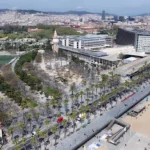
Spanning 40,000 square meters on the slopes of Montjuïc, Poble Espanyol (“Spanish Village”) is an architectural and cultural museum designed to recreate life across the Iberian Peninsula. The complex brings together 117 full-scale replicas of traditional homes, squares, and monuments—from whitewashed Andalusian alleyways to Basque stone farmhouses and a Catalan Romanesque monastery.

  • Open-air architectural museum built for the 1929 Barcelona World’s Fair
  • Full-scale reproductions representing 15 distinct autonomous regions of Spain
  • 20+ live artisan workshops featuring glassblowers, ceramicists, and leather crafters
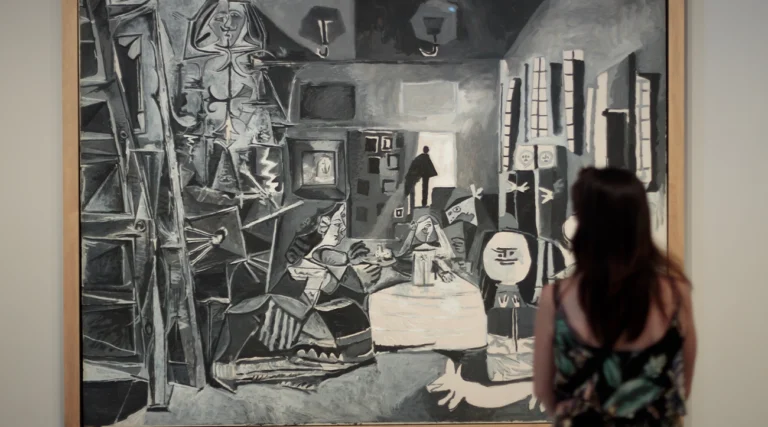
  • Fran Daurel Museum holding over 300 modern art masterworks by Picasso, Dalí, and Miró
  • Immersive multimedia spaces celebrating iconic Spanish festivals and traditions

☰ Table of content

Prices and hours of Poble Espanyol

Verify operating times and current ticket options before planning your trip up the hill:

Hours

  • Summer hours 10:00 - 24:00

    Mondays until 20:00

  • Winter hours 10:00 - 20:00

    Friday to Sunday until 24:00

  • Last entry 30 mins prior

Prices

  • Standard from 16€
  • Reduced from 10€

    4-12 yo, over 65, students

  • Free entry 0€

    Wheelchair

What to see in Poble Espanyol

Keep an eye out for these signature zones, art galleries, and craft highlights during your walkthrough:

1

Plaza Mayor Surreal

Central Castilian-style main square serving as the heart of the village for events, markets, and dining.

2

Fran Daurel Museum

Surprise contemporary art center showcasing original paintings, ceramics, and sculptures by 20th-century masters.

3

Monastery of Sant Miquel

Peaceful Romanesque-style chapel set in the Mediterranean zone, offering sweeping views across Barcelona.

4

Andalusian Quarter

Winding whitewashed lanes decorated with flower pots, hidden courtyards, and traditional tilework.

5

Artisan Workshops

Working glass, leather, ceramic, and jewelry studios where local craftspeople work in real time.

Quick summary of a Poble Espanyol visit

Keep these fast practical factors in mind when choosing the right time for your tour:

How to visit Poble Espanyol

Compare standard day passes, audio guide packages, or family gymkhana riddle add-ons:

Good to know

  • Wear sturdy walking shoes
  • The site is mostly outdoors
  • Artisan studio operating hours vary slightly
  • Outside bicycles, scooters, and unleashed pets are not permitted

Practical tips

  • Buy tickets online ahead of time to save around 10%
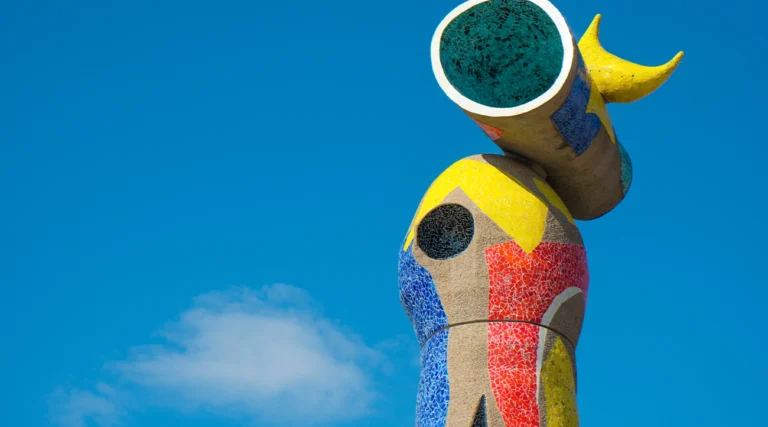
  • Combine your visit with the Magic Fountain or the nearby Fundació Joan Miró
  • Check the event calendar for evening flamenco performances
  • Walk out to the esplanade near the Sant Miquel Monastery

How to reach Poble Espanyol

Find your way to the complex easily from central Barcelona transport hubs:

Metro

Lines L1 (Red) and L3 (Green) to Espanya, followed by a 10-minute walk up Avinguda Francesc Ferrer i Guàrdia.

Bus

Routes 13, 23, and 150 stop directly outside the village main gates.

Walking

A scenic 12-minute walk from Plaça d'Espanya along the base of Montjuïc.

Av. de Francesc Ferrer i Guàrdia, 13, Sants-Montjuïc, 08038

History of Poble Espanyol

Poble Espanyol was created for the 1929 Barcelona International Exposition. Modernist architect Josep Puig i Cadafalch originally conceived the idea of an open-air pavilion representing Spain’s architectural heritage.

To execute the vision, project leader Miquel Utrillo, painter Xavier Nogués, and architects Francesc Folguera and Ramón Reventós traveled across more than 1,600 towns and villages throughout Spain to collect notes, sketches, and photographs.

Construction began in January 1928, yielding a 50,000 m² village incorporating authentic architectural elements from Galicia to Andalusia. Although originally destined for demolition after the Expo closed in 1930, the project achieved such popular acclaim that the city preserved the complex permanently.

Following decades of varying uses—including a brief period as a internment camp during the Spanish Civil War—the city Council revitalized Poble Espanyol in the late 1980s as a dedicated cultural and craft hub. In 2001, the addition of the private Fran Daurel contemporary art collection further transformed the site into an all-in-one cultural destination.

Curiosities about Poble Espanyol

  • The team of creators drove through thousands of Spanish towns in a single automobile to document real buildings before drawing the blueprints.
  • Two giant figures (Gigantes) standing near the entrance gate are modeled after the very first two visitors who entered the venue on opening day in 1929.
  • The Monastery of Sant Miquel is not a replica of a single building, but a composite design blending elements from multiple Romanesque Catalan monasteries.
  • The Fran Daurel Museum holds a rare collection of ceramics designed directly by Pablo Picasso.
  • The main square, Plaza Mayor, is modeled after the historic town square of Riaza in Segovia.

Tickets and tours Poble Espanyol

Find your stay near Poble Espanyol

Browse recommended hotels and guest suites situated around Plaça d’Espanya and Montjuïc:

Frequently Asked Questions - FAQ

Is Poble Espanyol a real inhabited village?

No, it is an open-air architectural museum built as a life-sized replica of traditional Spanish regional architecture.

Exploring the regional streets, craft workshops, and art museum generally takes between 2 to 3 hours.

Yes, general entry tickets include full access to the Fran Daurel Contemporary Art Museum and the outdoor Sculpture Garden.

Yes, the streets and main pavilion exhibits are wheelchair and stroller accessible, though some streets feature gentle cobblestone slopes.

Yes, over 20 active artisan workshops operate inside the village where you can watch glassblowers, leather makers, and ceramicists.

Yes, the village features several regional Spanish restaurants, tapas bars, and cafes scattered throughout the plazas.

Yes, the complex remains open until midnight from Tuesday to Sunday, hosting evening dining, concerts, and events.

It is located roughly 800 meters away, making it an easy 10 to 12-minute walk up the hill.

More activities and experiences in Barcelona

You might also be interested in...

The journey continues…

Jardines de la Tamarita
Restaurant Senyor Parellada in Barcelona
Sant Pol de Mar
Luggage store in Barcelona
Font de Sant Just details
Parque del Laberint d'Horta landscape

Must-Do Activities & Tours

Share:
Prev
Camp Nou & Barça Museum guide: hours, stadium & trophies
Next
Museu Nacional d’Art de Catalunya (MNAC): a complete guide

Explore all cities