




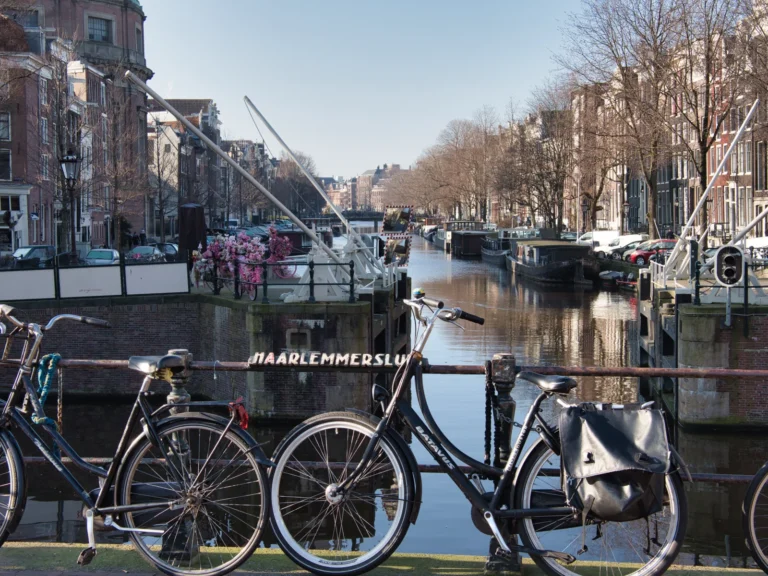
A slow city break is a trip with fewer changes of scene and more time inside each one. You might still visit a major museum or a famous monument. The difference is that the rest of the day gives that visit room: a nearby lunch, a walk through one neighbourhood and the possibility of staying longer when something interests you. Here is how to design that kind of break without turning “slow travel” into another set of rules.
Reduce changes of scene, not simply the number of attractions
A day with two visits on opposite sides of a city can feel more hurried than a day with four short stops along one walk. Count transfers, check-ins and fixed appointments as well as attractions. Those transitions consume attention and make it harder to linger.
Choose one area for each half-day and one main reason to be there. Everything else is optional within that area. If you finish early, you can explore further; if the main visit takes longer, nothing important collapses. This is more useful than filling a timetable and labelling the final hour “free time”.
A slow break also needs enough usable time. A late arrival followed by an early departure may be a perfectly reasonable short trip, but it should not be advertised to yourself as three relaxed days. Count the time between reaching your accommodation and needing to leave it.
Choose a small base you can return to
Look for a neighbourhood where the ordinary parts of the trip work: breakfast, an evening meal, a place to sit and a straightforward route back. The hotel does not have to be beside every landmark. It should make it easy to stop travelling for a while.
Compare an actual address with two or three likely outings. A room that saves one transfer every day can be worth more than a room with a famous view you barely use. Conversely, if you want to spend afternoons resting or reading in the accommodation, comfort and outdoor space may be part of the holiday rather than extras.
Read the area-first accommodation guide before you shortlist rooms. Use the full-stay price and the routines you want, rather than a vague distinction between “central” and “local”.

Use a flexible day structure
Morning — one reason to go out
Choose the collection, market, building or neighbourhood you most want to spend time with. Leave its finishing time open where possible.
Lunch and afternoon — stay in the same area
Choose a meal nearby, then continue on foot or sit down. Avoid another reservation that forces you to leave a rewarding visit.
Evening — one simple decision
Return to the base or choose a district for dinner. A second major outing is optional rather than the measure of a successful day.
This is a structure, not a compulsory pace. Someone who loves a long museum visit may spend most of the day there; someone else may prefer several short interiors along a walk. Slow travel means controlling the transitions and commitments, not making every activity last a prescribed number of hours.
Give a neighbourhood a real subject
“Wander around” can be appealing, but a loose subject gives a walk direction without turning it into a race. Look at shopfronts, courtyards, food traditions, building materials or how streets connect to a river. Choose something you enjoy noticing.
Start with one relevant guide and keep the route small. Return along a different street, stop when you find somewhere interesting and allow yourself to repeat a café or square. Repetition lets you notice changes in light, activity and use that a single pass misses.
A useful example is Testaccio in Rome if food and neighbourhood history interest you, or Canal Saint-Martin in Paris for a different waterside urban setting. These are possible subjects for a half-day, not a requirement to insert the same cities into every slow itinerary.
What to book, and what to leave open
| Part of the trip | Usually worth fixing | Usually worth leaving flexible |
|---|---|---|
| Main visit | A scarce entry time for the reason you travelled | Its neighbouring walk and café stop |
| Meals | One restaurant you specifically want | Every lunch and coffee |
| Transport | The necessary arrival and departure journey | Minor movements that can be decided locally |
| Excursions | A deliberate day outside the city | A distant trip inserted to fill a spare afternoon |
The goal is not to avoid reservations. A well-chosen reservation can remove uncertainty and make a day calmer. The problem is a chain of reservations that leaves no freedom between them. Keep the commitments that matter and remove the ones that merely make the spreadsheet look complete.
Two nights, three nights or longer?
For two nights, one neighbourhood and one main visit may be enough to give the break a clear shape. Use the arrival evening locally instead of making up for lost time. For three nights, you can separate a major cultural visit from a more open neighbourhood day.
With more time, resist automatically adding another city. Consider a second visit to an area, a different collection or an ordinary morning without a departure deadline. Moving accommodation can be worthwhile, but it has a cost in packing, luggage and orientation.
At the end of the trip, judge what stayed with you rather than how much you completed. If you can describe a place you got to know, a visit you gave proper attention and an evening you enjoyed, the trip has substance. You do not need an untouched checklist to prove you rested.
Make this trip work
- Count transfers and appointments.
- Choose one area per half-day.
- Book what matters; leave the surroundings open.
- Make the accommodation support your daily rhythm.
Read next
Turn an interest into a route.
Make the accommodation support the trip.
One search.
More ways
to explore.
Compare tickets, tours and activities from different providers, all in one place.