























In short
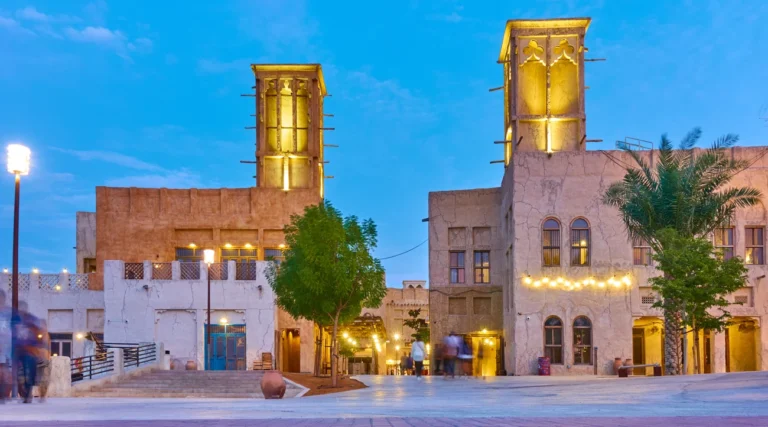
Al Fahidi is the restored wind-tower neighbourhood on the Bur Dubai side of the Creek. Its value is in the small-scale streets: courtyard houses, narrow passages and towers designed to catch moving air. It offers a different view of Dubai from an observation deck, and a different history from the heritage-inspired development at neighbouring Al Seef.
- Explore the public lanes without a general neighbourhood admission ticket.
- Galleries, cultural meals and individual interiors have their own opening arrangements.
- Al Fahidi Fort is a separate site; do not assume it is open because the streets are accessible.
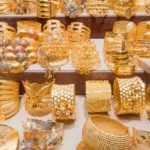
- The Gold and Spice Souks are across the Creek in Deira.
☰ Table of content
Walk the wind-tower lanes of Al Fahidi
Start with the lanes around the wind-tower houses rather than trying to see every place described as Old Dubai in one stop. The historic quarter is on the Bur Dubai bank. Walk slowly enough to notice how a shaded passage opens into a small courtyard, then compare that enclosed setting with the waterfront nearby.
A cooler morning or late-afternoon visit is more comfortable for an outdoor route. A gallery or café can provide a useful break, but check that particular venue before relying on it. Shade changes through the day and an attractive narrow lane is not the same as an air-conditioned attraction.
-
Public lanes Outdoor visit
Individual cultural venues set their own hours
-
Cultural interiors Check the programme
Meal bookings and exhibitions are separate decisions
-
Suggested time 60–90 minutes
Editorial allowance for a first walk, before longer stops
-
Independent lane walk Free
No general neighbourhood admission ticket
-
Meals and cultural sessions Extra
Book the specific programme or venue you want
-
Creek crossing Separate fare
Use the actual abra route and landing for the next bank
Look at the courtyard houses, not just the skyline
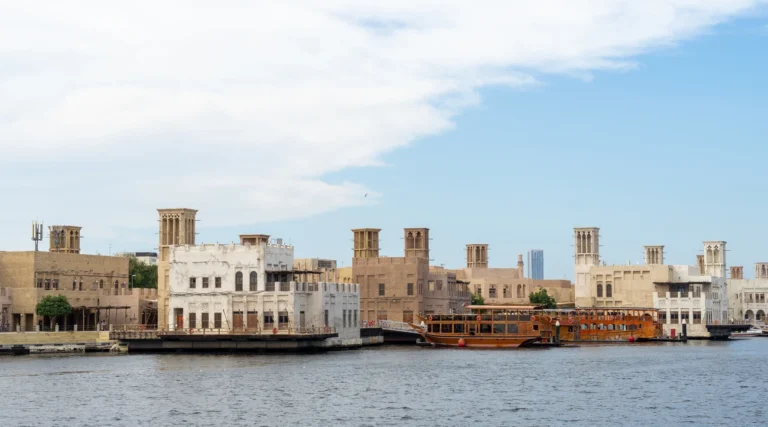
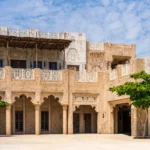
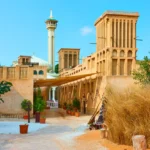
The barjeel wind towers are the most recognisable part of the area’s architecture. Look at the tower in relation to the house beneath it: the courtyard, thick walls and narrow street form a larger response to the climate. The neighbourhood is a restored heritage district with present-day cultural uses, not a complete working household frozen in the nineteenth century.
Give individual buildings room in the walk. A doorway can lead to a gallery, cultural institution or private working space; an open-looking entrance is not permission to wander through every room. Follow the signs and staff instructions when moving from a public lane into an interior.
Wind towers
See how the barjeel sits above the rooms and courtyard.
Narrow lanes
Compare enclosed passages with the more open public spaces.
Courtyard houses
Treat doors and courtyards as individual places with their own access.
Cultural interiors
Choose a gallery or hosted cultural visit for its current programme.
The waterfront connection
Continue towards Al Seef without confusing its redevelopment with the historic quarter.
Plan an Al Fahidi walk before crossing the Creek
For a first independent visit, allow roughly 60–90 minutes as an editorial walking allowance, then add time for a booked cultural meal, exhibition or café. This is not a prescribed tour duration. The compact lanes reward a shorter, attentive visit more than a route that rushes through every courtyard.
Keep the Bur Dubai part together: Al Fahidi, a chosen section of Al Seef and the older souk area can form one side of the day. If you also want Deira’s markets, identify the abra station and make that a separate crossing. Do not route the group repeatedly between opposite banks simply because several map pins look close.
Choose a cultural visit or continue to Al Seef
The neighbourhood includes cultural organisations, small exhibitions and places to eat. Choose one interior for its current programme rather than assuming every heritage house offers the same experience. A cultural meal or hosted discussion can add interpretation that an independent walk does not provide; it also needs its own reservation and time allowance.
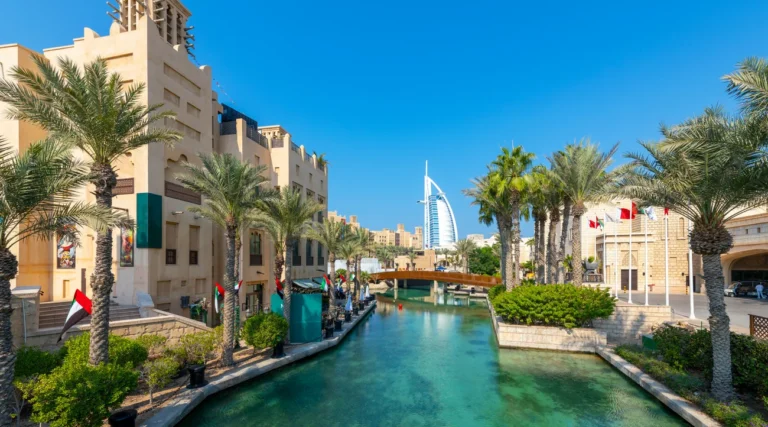
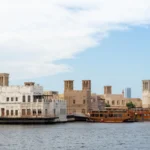
Al Seef is an adjoining waterfront development. Visit it for the Creek promenade, restaurants and the contrast between heritage-inspired and contemporary design. Keeping the distinction clear makes both places more interesting: Al Fahidi supplies the historic urban setting, while Al Seef is a later redevelopment beside the water.
Good to know
- Use Al Fahidi Historical Neighbourhood, Bur Dubai, as the destination.
- Public lanes and individual cultural venues have different access arrangements.
- Check the fort separately rather than treating it as part of an open street ticket.
- Ask before photographing people or entering a quiet courtyard in use.
Practical tips
- Choose one cultural interior and leave enough time for it.
- Group Al Fahidi and Al Seef on the same bank before visiting Deira.
- Use the chosen abra station, not a random sightseeing boat, for a simple crossing.
- Shorten the exposed connecting walk in Dubai’s hotter months.
Reach Al Fahidi on the Bur Dubai bank
Sharaf DG on the Green Line is a useful approach to the Al Fahidi area; BurJuman offers a Red/Green Line interchange for a wider Bur Dubai route. Compare the actual street walk from the exit with the place you intend to start.
The older name Al Fahidi still appears in some directions for the station, so use the current Metro map rather than assuming the historic neighbourhood name identifies the station signage.
For a taxi, specify the historical neighbourhood and the venue or entrance. Al Seef, Al Fahidi Fort and the Deira Gold Souk are different drop-offs. If arriving from Deira by abra, allow the additional walk from the Bur Dubai landing instead of assuming the boat docks inside the historic quarter.
Sharaf DG is a useful Green Line approach; BurJuman is an alternative interchange for a wider Bur Dubai walk.
Combine the historic quarter with Al Seef on the same bank, then plan the souk and abra connection.
Specify Al Fahidi Historical Neighbourhood and a particular venue, rather than simply Old Dubai.
Al Fahidi Historical Neighbourhood, Bur Dubai, Dubai, United Arab Emirates
Getting around Dubai
Distinguish the neighbourhood, fort and waterfront
- Al Fahidi Historical Neighbourhood is the wind-tower quarter.
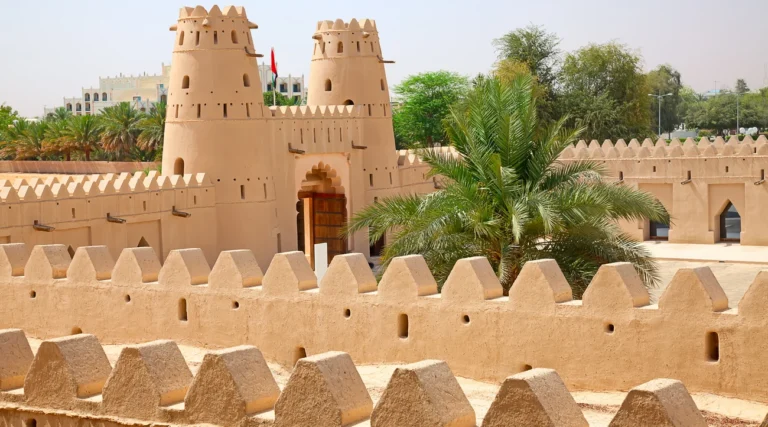
- Al Fahidi Fort is a separate historic building with its own visitor status.
- Al Seef is an adjoining modern waterfront development inspired partly by local heritage.
- Deira’s Gold and Spice Souks require an onward journey across the Creek.
How wind towers and trading families shaped Al Fahidi
Al Fahidi preserves the scale and architectural character of a trading neighbourhood associated with Dubai’s growth beside the Creek. Its wind-tower houses and courtyards recall life before the contemporary high-rise city. Restoration and cultural reuse have made the area part of the visitor’s Dubai without making every building a museum.
Read allShow less
Read allShow less
The Creek linked the settlement to maritime trade, while houses clustered around lanes and internal courtyards. Wind towers directed air into rooms before mechanical cooling became commonplace. Viewed as a group, the tower, shaded passage and courtyard reveal more than the outline of a single picturesque façade.
The neighbourhood is also known as Al Bastakiya. Its present identity combines conserved buildings with galleries, cultural organisations and hospitality uses. That continuing use is part of the visit: the aim is to understand the scale of older Dubai, not to assume that every shopfront or reconstructed detail belongs to one unchanged historical moment.
Dubai Frame tickets and Old Dubai walking experiences

Al Fahidi visiting questions
Is Al Fahidi free to visit?
The public lanes can be explored without a general neighbourhood ticket. Meals, cultural sessions and individual interiors have their own arrangements.
Is Al Fahidi the same as Al Seef?
No. Al Fahidi is the historic wind-tower neighbourhood; Al Seef is an adjoining modern waterfront development with heritage-inspired and contemporary areas.
Which side of Dubai Creek is it on?
It is on the Bur Dubai bank. The Gold and Spice Souks are on the Deira bank across the water.
How much time should I allow?
A first lane walk can take around 60–90 minutes as an editorial planning allowance. Add time for a gallery, cultural meal or an onward waterfront walk.
Which Metro station is useful?
Sharaf DG on the Green Line is a useful approach. BurJuman can suit a wider route using the Red/Green Line interchange; compare the final street walk.
Does a visit include Al Fahidi Fort?
No. The fort is a separate site and its opening status must be checked independently. Access to public lanes does not establish access to the fort or Dubai Museum.
Is it comfortable in summer?
Plan a shorter outdoor route in a cooler part of the day and check an indoor break. Narrow lanes offer some shade, but the district is still an outdoor visit.
Does every Old Dubai tour include Al Fahidi?
No. Read the stated route, meeting point and cultural stops. A tour describing Deira souks or the Creek does not automatically include the wind-tower quarter.