































In short
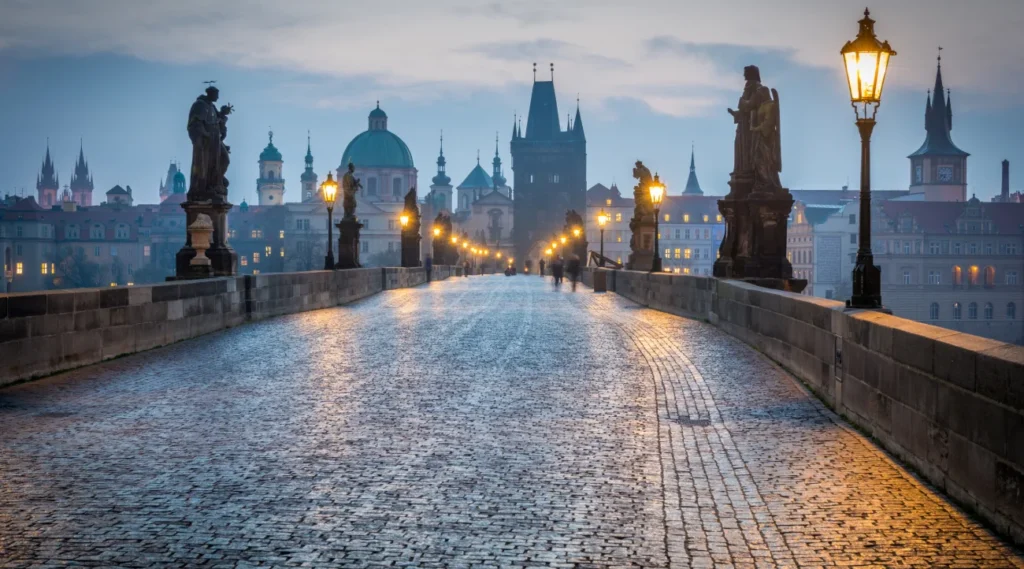
- Shoes first: Prague’s mosaic cobbles (kočičí hlavy) and steep lanes to the castle punish thin soles and heels; bring cushioned trainers or boots with grip.
- Layers: spring and autumn swing between cool mornings and warm afternoons; a light jacket is needed even in June evenings by the river.
- Winter: January averages 2 °C by day and −3 °C at night: hat, gloves, warm socks and waterproof boots for slush.
- Day bag: small enough for the castle security check and museum cloakroom rules.
☰ Table of content
What makes packing for Prague different
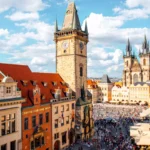
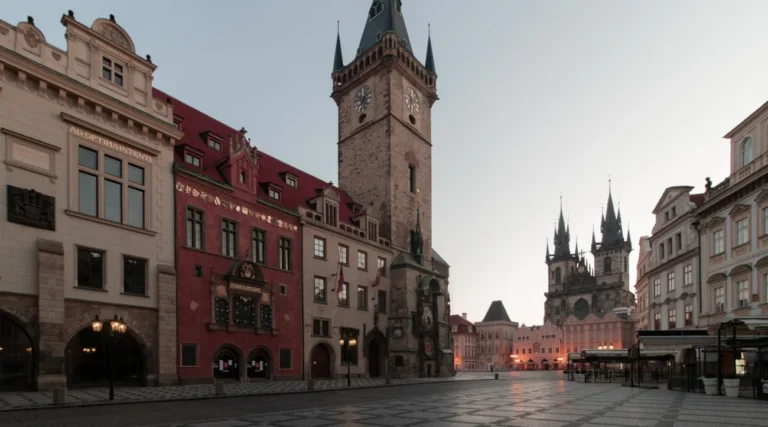
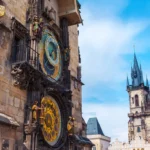
It is less about the temperature than about the ground: you will walk on uneven stone paving for hours, climb to Hradčany and stand outside at the Astronomical Clock and the Christmas markets.
Grip and cushioning
A packable rain layer
A warm hat in winter
A refillable bottle
What the weather is like through the year
Long-term averages from the Czech Hydrometeorological Institute; individual days can be far warmer or colder.
Spring (March–May)
Highs from about 9 °C in March to 19 °C in May, chilly evenings. Pack a light down or fleece layer, a waterproof shell and comfortable closed shoes.
Summer (June–August)
Highs of 22–24 °C, sometimes above 30 °C; July is the wettest month, with short thunderstorms. Breathable clothes, sun hat, sunscreen and a compact umbrella.
Autumn and winter
October around 13 °C, November 7 °C and often foggy; December–February near freezing with occasional snow. A warm coat, thermal layer and waterproof boots make the Christmas markets enjoyable.
Things that help on every visit
Shoes
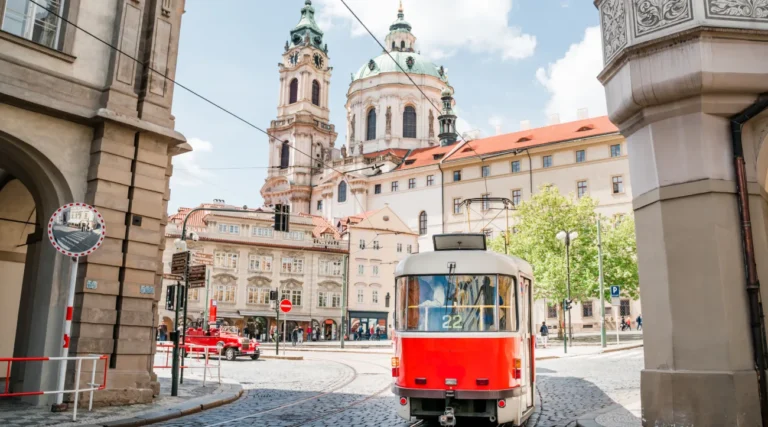
The Royal Route from the Powder Tower to the castle is about 3 km, much of it on cobbles and the last part uphill. Wheeled suitcases rattle badly on the same streets, so a backpack is easier if your hotel is in the Old Town.
A day bag
Every castle entrance has a bag check, and the National Gallery sends anything over 50 × 30 × 20 cm to the cloakroom. A small backpack or cross-body bag avoids both problems, and zips help on crowded trams.
Cobblestones decide your shoes
Wet stone paving is slippery, and in winter some side streets are icy in the morning; soles with grip matter more than style.
Clothes for churches
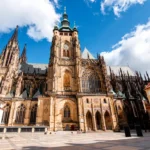
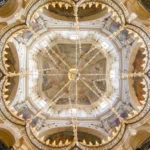
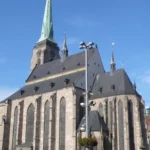
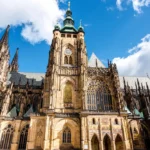
There is no strict dress code for St Vitus or St Nicholas, but covered shoulders are respectful during services; churches can be cold even in summer, so a light layer is useful for concerts.
Good to know
- Plugs: Czechia uses type E sockets (230 V), compatible with most European plugs.
- Pharmacies: look for “Lékárna”; the main station has one.
- Water: tap water is safe; restaurants may charge for bottled water.
Avoid these mistakes
- Do not bring new shoes. Break them in before walking on cobbles.
- Do not pack only summer clothes for May or September. Evenings can drop below 10 °C.
- Do not drag a large suitcase up to Hradčany. Leave it at the hotel or station.
Preparing for rain
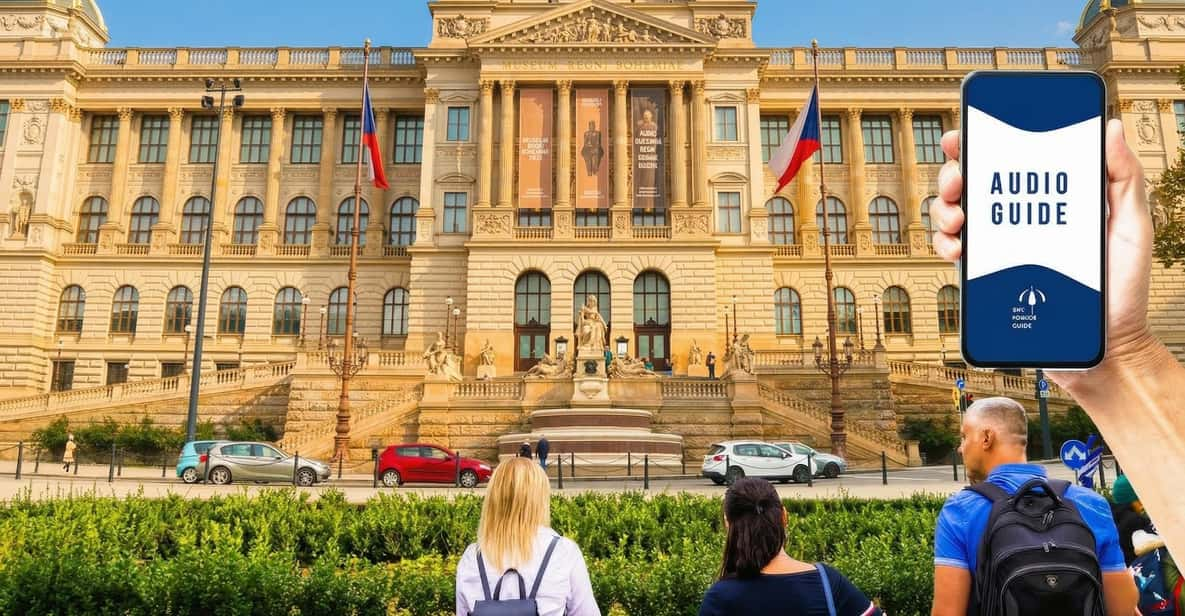
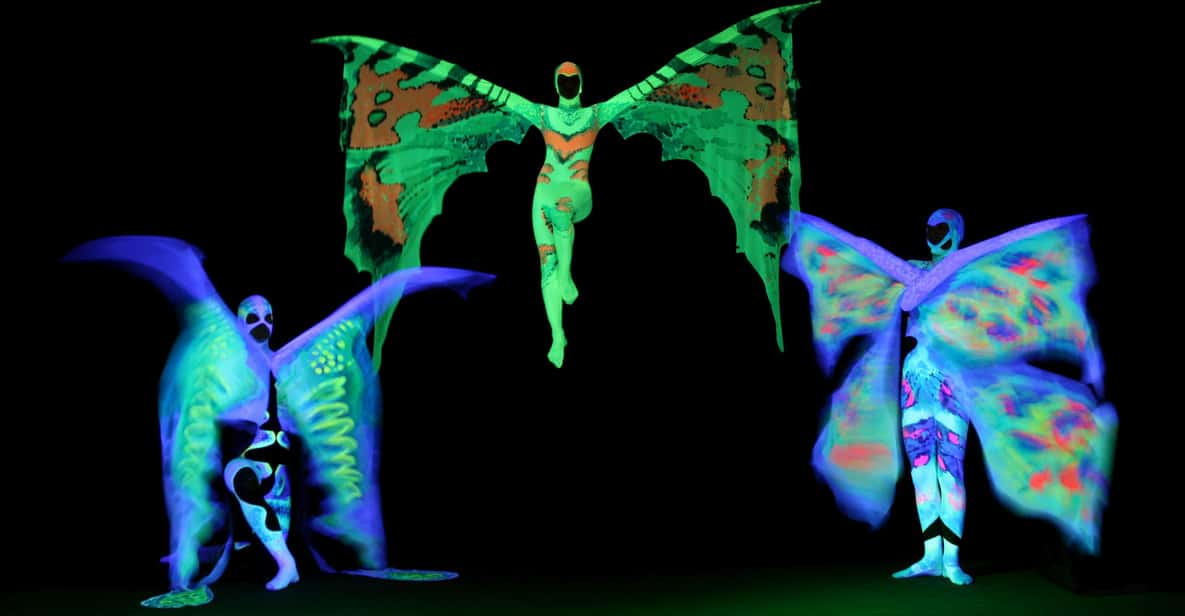
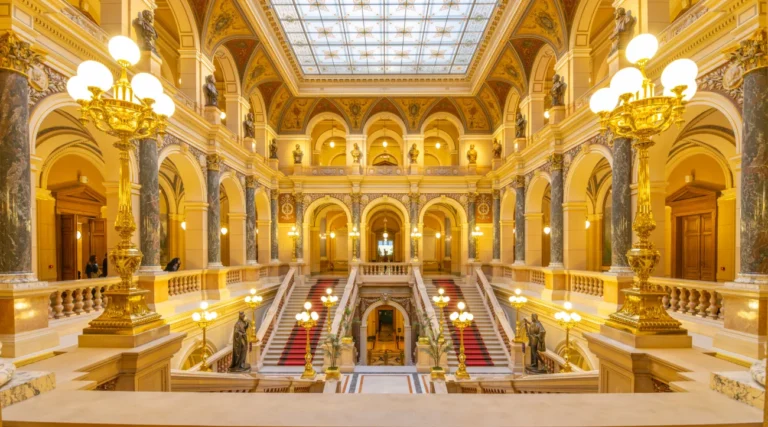
Keep an indoor plan ready: the National Museum (open daily 10:00–18:00), the Klementinum guided tour and an evening black light theatre show are all independent of the weather.
Indoor tickets for bad weather
Good to have in reserve on a rainy or freezing day.

Klementinum Library & Astronomical Tower Official GuidedTour

Prague: National Museum Ticket & Online Audioguide City Tour

Prague: Black Light Theatre Show Ticket
Compare a few options
The National Museum fills a morning, the Klementinum an hour and black light theatre an evening.

Frequently asked questions
What shoes should I wear in Prague?
Cushioned, closed shoes with good grip; the centre is paved with cobbles and the castle is uphill.
What should I pack for Prague in winter?
A warm coat, thermal layer, hat, gloves and waterproof boots; January averages about 2 °C by day.
Does it rain a lot in Prague?
Rain is spread through the year; July is the wettest month with short, heavy storms.
What plug do I need for Prague?
Type E sockets at 230 V, the same as in most of continental Europe.