In short
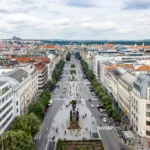
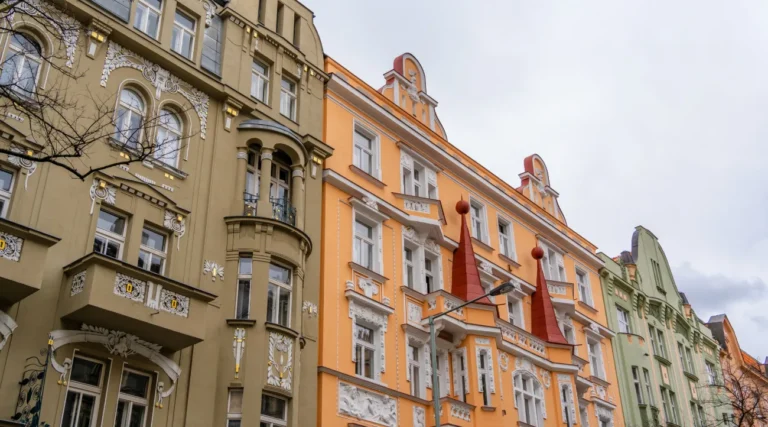
Wenceslas Square (Václavské náměstí) is less a square than a grand boulevard, about 750 metres long, running from Můstek up to the National Museum. It is lined with hotels, shops and Art Nouveau buildings, and has been the stage of the great moments of modern Czech history, from the protests of 1968 to the Velvet Revolution of 1989.
☰ Table of content
Wenceslas Square opening times and prices
The square is free and open at all hours. The National Museum at the top has its own ticket. Prices below are official rates in Czech crowns, with approximate euro conversions.
-
Square Open 24 hours
Free
-
National Museum 10:00–18:00
Daily
-
Square Free
Walk any time
-
National Museum 360 CZK (≈ €15)
Children up to 15 free
-
Mucha Museum 300 CZK (≈ €12)
A few minutes away
What to see on Wenceslas Square
Walk the length of the square in about 15 minutes, then explore the passages and side streets. These are the highlights.
Statue of St Wenceslas Free
The equestrian statue of the patron saint by Myslbek, a traditional meeting point.
National Museum Ticket
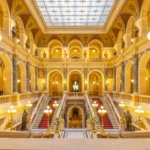
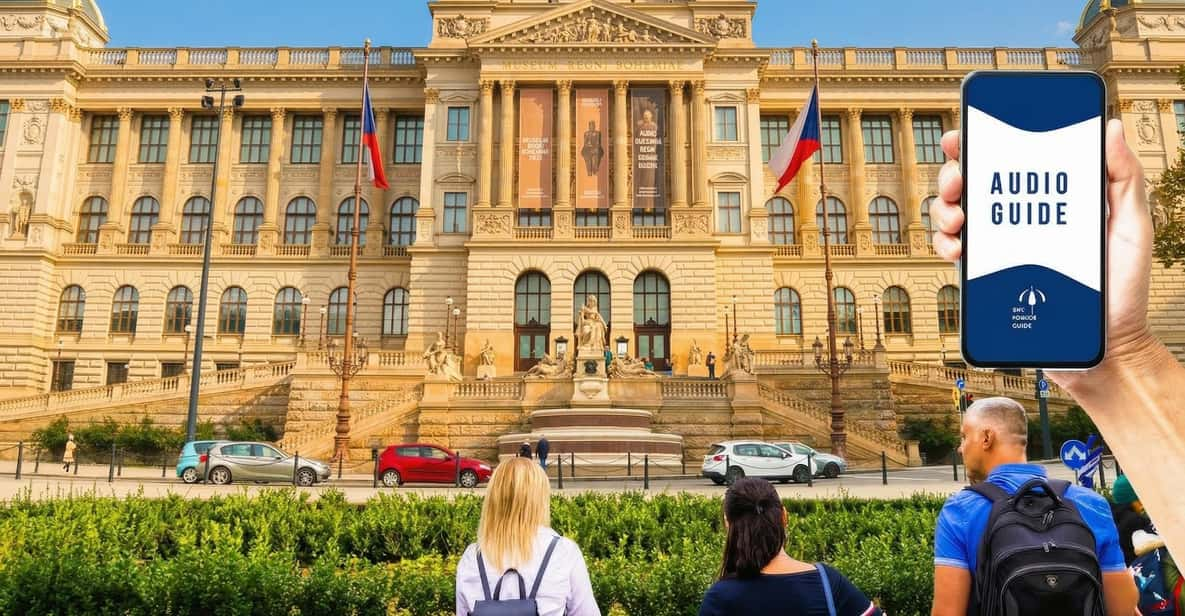
The Neo-Renaissance museum building closing the top of the square.
Jan Palach memorial Free
A memorial in the pavement to Jan Palach and Jan Zajíc.
Lucerna passage Free
An Art Nouveau arcade with David Černý's upside-down horse.
Art Nouveau façades Free
Hotels and buildings such as the Hotel Europa.
Wenceslas Square at a glance
A quick summary to plan your visit.
How to visit Wenceslas Square
There is no ticket for the square. Combine the walk with the National Museum at the top, the Mucha Museum nearby or a coffee in one of the historic passages.

Prague National Museum: Entry Ticket + City Tour Audio Guide

Prague: National Museum Ticket & Online Audioguide City Tour
Good to know
- The lower end of the square is busy day and night.
- At night, ignore touts offering clubs or exchange, and only change money at offices that show the rate clearly.
Practical tips
- Start at the top by the statue of St Wenceslas and walk down.
- Duck into the Lucerna passage to see David Černý’s upside-down horse, a witty response to the statue outside.
How to reach Wenceslas Square
Wenceslas Square is in the New Town, between Můstek (where the Old Town begins) and the National Museum at the top.
Lines A and C to Muzeum at the top, or lines A/B to Můstek at the bottom of the square.
Trams cross the square at Václavské náměstí and stop at Muzeum.
From Old Town Square walk via Melantrichova street to Můstek in about 5 minutes.
Wenceslas Square (Václavské náměstí), 110 00 Prague 1
Getting around Prague
From horse market to symbol of freedom
Charles IV founded the square in 1348 as the Horse Market of his New Town. In 1912 the statue of St Wenceslas by Josef Václav Myslbek was unveiled; in 1969 the student Jan Palach set himself on fire here in protest at the Soviet occupation, and in November 1989 huge crowds gathered here during the Velvet Revolution.
Key dates on Wenceslas Square
- 1348 – Charles IV founds the Horse Market in his New Town.
- 1848 – The square is renamed after St Wenceslas.
- 1891 – The National Museum building opens at the top.
- 1912 – The statue of St Wenceslas by Josef Václav Myslbek is unveiled.
- 1969 – Jan Palach sets himself on fire in protest at the occupation.
- 1989 – Mass demonstrations here help bring down communist rule.
Details to look out for
- The St Wenceslas statue – the meeting point at the top of the square.
- The Palach memorial – a cross in the pavement in front of the museum.
- The Lucerna horse – David Černý’s upside-down horse in the passage.
- Hotel Europa – an Art Nouveau façade.
Tickets for sights around Wenceslas Square
Find your stay near Wenceslas Square
Vinohrady and the New Town around the square are central, well connected bases. Use the map below to compare hotels and apartments nearby.
Frequently Asked Questions - FAQ
Is Wenceslas Square free?
Yes, the square is free and open 24 hours a day.
How long is Wenceslas Square?
About 750 metres, from Můstek to the National Museum.
What happened here in 1989?
Huge crowds gathered on the square during the Velvet Revolution, which ended communist rule.
Who was Jan Palach?
A student who set himself on fire here in January 1969 to protest the Soviet occupation; a memorial marks the spot.
Where is the upside-down horse?
In the Lucerna passage, just off the square; it is a sculpture by David Černý.
Is it safe at night?
Generally yes, but ignore street touts and change money only where rates are clearly shown.
What is at the top of the square?
The National Museum and the statue of St Wenceslas.
How do I get there?
Take the metro to Muzeum (lines A and C) or Můstek (lines A and B).